

TL;DR:
- Synthetic peptides act as precise molecular signals to enhance repair and growth beyond traditional supplements.
- Evidence shows biological activity, but human performance improvements remain unproven and modest.
- Using peptides carries risks, legal restrictions, and requires sourcing from verified suppliers with health monitoring.
Most athletes and biohackers still default to protein powders, creatine, and caffeine. That framework works, but it barely scratches the surface of what targeted biochemistry can do. Synthetic peptides operate at a different level entirely, acting as precise molecular signals that tell your body to repair faster, release more growth hormone, or rebuild damaged tissue. This article breaks down what peptide performance actually means, how the leading compounds work, what the evidence really shows, and the risks you cannot afford to ignore. Whether you are optimizing recovery or exploring the frontier of human performance, you need accurate information before you act.
Table of Contents
- What is peptide performance?
- How do performance peptides work in the body?
- Does peptide performance actually deliver? Evidence and outcomes
- Risks, side effects, and regulations: What you must know
- Peptide performance: What most overlook
- Explore peptide performance resources
- Frequently asked questions
Key Takeaways
| Point | Details |
|---|---|
| What peptide performance means | It involves using specific peptides to target athletic performance, recovery, and muscle optimization. |
| How peptides act | These compounds act as messengers, stimulating growth, repair, and metabolic benefits with more precision than hormones. |
| Evidence is early | Most evidence comes from animal studies and small human trials, with robust data still lacking for direct performance enhancement. |
| Use brings risks | Potential side effects and strict legal anti-doping regulations make informed, cautious use essential. |
| Education first, not shortcuts | Start with research and high-purity sources before considering peptide protocols for performance. |
What is peptide performance?
Peptide performance refers to using synthetic peptides to enhance athletic outcomes, muscle growth, and recovery. Unlike broad-spectrum supplements, each peptide targets a specific biological pathway. That precision is the whole point. You are not flooding your system with a hormone; you are sending a targeted signal.
To understand what are peptides at a foundational level, think of them as short chains of amino acids, smaller than full proteins, that your body already uses as communication tools. Synthetic versions mimic or amplify those natural signals.
The most common goals driving peptide use in performance contexts include:
- Increasing lean muscle mass without the androgenic side effects of anabolic steroids
- Cutting recovery time between training sessions or after injury
- Improving endurance and work capacity
- Optimizing body composition by shifting the ratio of fat to muscle
- Supporting joint and connective tissue health over long training careers
Common performance peptides include Ipamorelin, CJC-1295, BPC-157, TB-500, and IGF-1 LR3, each with a distinct mechanism and risk profile. These are not interchangeable. Stacking them without understanding their individual actions is how people run into trouble.
“Peptides act as precise messengers. They do not override your endocrine system the way exogenous hormones do. They nudge it.”
Here is a quick reference for the core performance peptides:
| Peptide | Primary target | Main benefit |
|---|---|---|
| CJC-1295 | Pituitary gland | Sustained GH release |
| Ipamorelin | Ghrelin receptor | Pulsatile GH release, fewer side effects |
| BPC-157 | Gut and soft tissue | Accelerated healing, anti-inflammatory |
| TB-500 | Actin in cells | Tissue repair, flexibility |
| IGF-1 LR3 | Muscle and liver | Anabolic signaling, muscle hypertrophy |
Proper sourcing matters as much as the compound itself. Contaminated or mislabeled peptides are a real problem in unregulated markets. Purity verification from a named third party is not optional if you care about both results and safety.
With the basics clear, let’s break down how these peptides actually work inside your body.
How do performance peptides work in the body?
The mechanisms behind performance peptides are more nuanced than most fitness content suggests. Each class works through a different pathway, which is why lumping them together as “peptides” misses the point.
Growth hormone secretagogues like CJC-1295 and Ipamorelin work by mimicking natural signals that trigger your pituitary gland to release growth hormone. GH peptides amplify pituitary GH release via GHRH and ghrelin mimicry, which leads to downstream IGF-1 elevation, fat oxidation, and collagen synthesis. The result is a more anabolic internal environment without directly injecting GH itself.
The numbered sequence of events looks like this:
- You administer CJC-1295 or Ipamorelin subcutaneously
- The peptide binds to receptors in the pituitary or hypothalamus
- Your pituitary releases a pulse of natural GH
- The liver converts GH into IGF-1
- IGF-1 drives muscle protein synthesis and fat mobilization
The CJC-1295 + Ipamorelin stack is popular precisely because these two peptides hit different receptor types, producing a stronger and more sustained GH pulse than either compound alone. That synergy also amplifies risk, so dose discipline matters.
Tissue repair peptides work through a completely different mechanism. Repair peptides modulate growth factors like VEGF, enhance angiogenesis (new blood vessel formation), and accelerate post-injury recovery at the cellular level. BPC-157 in particular has a strong track record in preclinical models for healing tendons, ligaments, and gut lining. TB-500 works by binding to actin, a structural protein in cells, which promotes cell migration and tissue remodeling.

Pro Tip: If your primary goal is injury recovery rather than muscle gain, tissue repair peptides are a more targeted choice than GH secretagogues. Mixing all of them at once is not smarter; it is just harder to interpret what is working.
| Class | Example peptides | Mechanism | Primary use |
|---|---|---|---|
| GH secretagogues | CJC-1295, Ipamorelin | GHRH/ghrelin mimicry | Muscle, fat loss, recovery |
| IGF-1 analogs | IGF-1 LR3 | Direct anabolic signaling | Muscle hypertrophy |
| Tissue repair | BPC-157, TB-500 | VEGF, actin modulation | Healing, inflammation |
Now that you know the science, let’s see what the evidence says about whether peptide performance actually delivers results.
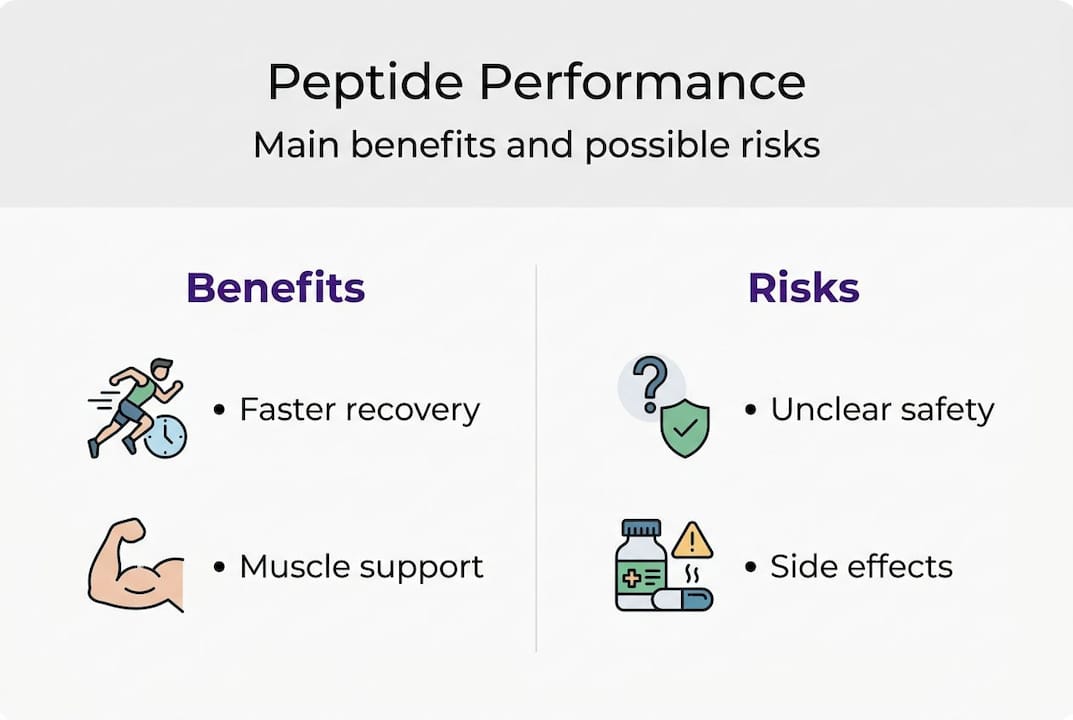
Does peptide performance actually deliver? Evidence and outcomes
This is where the conversation gets honest. The preclinical data is genuinely exciting. The human data is thin. Both things are true at the same time.
Strong preclinical data exists for healing, biomechanics, and GH/IGF-1 increases, but human randomized controlled trials (RCTs) are limited or absent for direct athletic performance outcomes. Rodent studies on BPC-157 consistently show faster tendon healing, reduced inflammation, and improved biomechanical strength. That is promising. It is not the same as a double-blind human trial.
For GH secretagogues, the human data is slightly better. CJC-1295 has shown GH increases of 2 to 10 times baseline and IGF-1 increases of up to 3 times in small human trials. Those are meaningful hormonal shifts. Whether they translate to measurable athletic performance gains in trained individuals is a different question that the research has not answered cleanly.
Key stat: BPC-157 pilot study: 7 out of 12 knee pain patients reported more than 6 months of relief. Small sample, but notable for a compound with essentially no pharmaceutical backing.
Here is a summary of the evidence landscape:
| Peptide | Animal evidence | Human evidence | Athletic RCTs |
|---|---|---|---|
| BPC-157 | Strong | Pilot only | None |
| CJC-1295 | Moderate | Small trials | None |
| IGF-1 LR3 | Strong | Very limited | None |
| TB-500 | Moderate | Anecdotal | None |
Anecdotally, the longevity and recovery community reports consistent themes: faster bounce-back from hard training blocks, reduced joint soreness, and better sleep quality from GH peptides. These reports are widespread enough to take seriously, but they are not controlled evidence. Placebo effects in performance contexts are substantial.
The honest takeaway is this: peptides show real biological activity, and some of that activity is measurable in humans. But if someone promises you guaranteed performance results backed by solid human research, they are overstating the science. Use the sports supplements review literature as a baseline for how to evaluate these claims critically.
With the promise and gaps in mind, it’s essential to understand the risks and real-world considerations before exploring performance peptides.
Risks, side effects, and regulations: What you must know
Peptides are not consequence-free. The targeted mechanism that makes them appealing also means that getting the dose or compound wrong has real consequences.
The main risks include:
- Hypoglycemia: IGF-1 LR3 can drop blood glucose significantly, especially when used without food
- Theoretical cancer risk: Angiogenic peptides like BPC-157 promote blood vessel growth, which could theoretically accelerate existing tumor growth
- Contamination: Risk of purity problems in unregulated sources is high; mislabeled or contaminated peptides are common in gray-market supply chains
- Improper dosing: Without clinical guidance, users frequently overdose or underdose, negating benefits or creating harm
- Injection site reactions: Subcutaneous administration can cause localized swelling, redness, or irritation
“The compound is only as good as its purity. A 70% pure peptide is not a 70% effective version of the real thing. It is an unknown substance with unknown risks.”
On the regulatory side, the picture is equally serious. All main performance peptides are WADA-prohibited, and using them as a competitive athlete risks a 4-year ban. This applies to GH secretagogues, IGF-1 analogs, and tissue repair peptides like TB-500. The BPC-157 and TB-500 legal status varies by country, but in the U.S., the FDA restricts compounding and sale for human use outside specific research contexts.
For biohackers not subject to anti-doping controls, the calculus is different but still requires discipline. Check the BPC-157 regulations page for current status, and always follow reconstitution best practices to avoid dosing errors.
Pro Tip: Before starting any peptide protocol, get baseline bloodwork including IGF-1, fasting glucose, and a full metabolic panel. Repeat at 4 weeks. Data protects you in ways that anecdote cannot.
With all of this in mind, it’s worth considering how you, as a high-performance individual or biohacker, can apply this knowledge ethically and effectively.
Peptide performance: What most overlook
Here is the uncomfortable truth that most peptide content skips: the people getting real value from these compounds are not using them to shortcut hard training. They are highly disciplined athletes and biohackers using peptides as a precision recovery tool on top of an already optimized lifestyle.
The fitness world hypes peptides as “safe steroids,” but that framing is wrong in two directions. They are not as risky as steroids, but they are also not as effective for raw muscle gain. Their real value is in targeted recovery for people who are already training at a level where recovery is the limiting factor.
Animal data is promising, but the human performance benefits remain unproven and carry real risks that deserve respect. Ethical use means sourcing from verified suppliers, monitoring your health markers, and staying compliant with the laws in your jurisdiction. If you want a deep dive on peptides before making any decisions, start there. For most people, informed curiosity is a smarter starting point than reckless experimentation.
Explore peptide performance resources
If this article has clarified the landscape for you, the next step is not immediately buying a stack. It is building a foundation of accurate knowledge first.
VANTA exists for people who take that foundation seriously. Start by reading the learn more about peptides page for a thorough breakdown of how peptides work at the biological level. If you are researching specific compounds, the CJC-1295 + Ipamorelin details page covers mechanism, dosing context, and purity specs. And before you handle any lyophilized peptide, use the reconstitution calculator to get your dilution right. Every product VANTA offers is verified at 99%+ purity by Janoshik, because the compound you use is only as good as the quality behind it.
Frequently asked questions
Are all performance peptides illegal for athletes?
Yes, the main athletic peptides including GHRPs, GH analogs, TB-500, and IGF-1 are WADA-prohibited substances, and use may trigger multi-year competitive bans.
Do peptides work better than steroids?
Peptides use targeted biological signals and carry a different risk profile, but limited proof exists for comparable muscle gains or direct performance enhancement compared to anabolic steroids.
What are the most common side effects of performance peptides?
The most frequently reported side effects include hypoglycemia, localized injection site swelling, fatigue, and a theoretical cancer risk from angiogenic peptides in individuals with existing vulnerabilities.
Is there any human research showing peptides boost athletic performance?
No robust human RCTs confirm direct athletic improvement, though some small trials confirm GH/IGF-1 increases in response to GH secretagogue administration.
How can biohackers minimize risks when using peptides?
Use only high-purity verified sources, keep cycles to 2 to 6 weeks, monitor IGF-1 and fasting glucose regularly, and avoid peptide use entirely if you have a personal or family history of cancer.